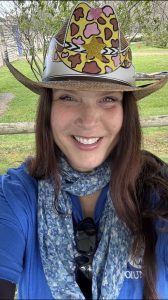
I am a licensed K–12 Art Teacher and Art Therapy Teacher in the state of Virginia. I first learned about the Masterson Method Equine Specialist (MMES) through an equine-assisted center in my local community.
During a demonstration session facilitated by a mental health therapist who works at the center and is also a certified MMES, I was introduced to The Masterson Method® for the first time. I immediately connected with the process and, most importantly, with what it offered the horses.
Watching the horses respond during the session was an incredibly meaningful experience. I witnessed subtle changes and releases that seemed almost magical—the horses appeared to let go of tension and become more relaxed and comfortable. It made me curious about what was happening beneath those visible responses and motivated me to learn more.
I became especially interested in the philosophy behind The Masterson Method: recognizing the horse’s responses, working with rather than against the horse, and creating an opportunity for the horse to participate in the process.
I wanted to learn more about how this rewarding experience can benefit horses, particularly the hard-working horses involved in equine-assisted programs. These horses give so much to the people they work with, and I was drawn to the idea of finding meaningful ways for humans to give something back to them.
My interest in becoming an MMES grew from that experience. I want to deepen my understanding of the horse’s responses, learn to recognize and support releases appropriately, and develop the skills to partner with horses in a way that respects their physical and emotional needs.
My work as an art teacher and art therapy teacher has taught me the importance of observation, patience, nonverbal communication, creativity, and meeting each individual where they are. I see many parallels between these principles and The Masterson Method. As I continue to develop my knowledge and skills in The Masterson Method, I hope to incorporate this learning into educational experiences where students can be introduced to the Bladder Meridian Technique in an age-appropriate and supervised setting. Teaching students how to observe the horse’s responses, respect the horse’s boundaries, and recognize signs of relaxation and release could provide them with meaningful opportunities to develop empathy, mindfulness, body awareness, and responsible horsemanship while learning how to give back to the horses that support equine-assisted programs.
For me, The Masterson Method represents more than a technique. It is an opportunity to listen to the horse, build trust, and express gratitude to an animal that gives so much to the people around it.